Tuesday, 10 August 2021


Bayer loses another appeal against Roundup cancer verdict

An appeals court in San Francisco upheld the 2019 ruling in favor of a couple who claimed they got non-Hodgkin's lymphoma after using Roundup for years.
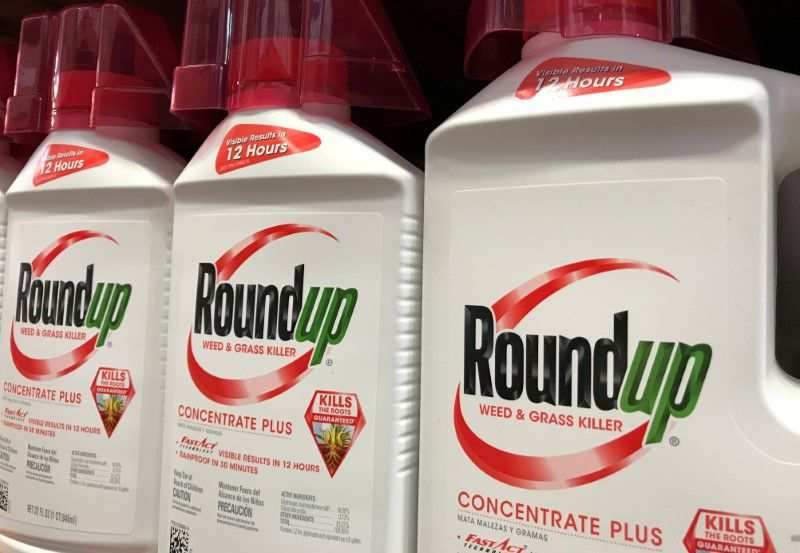
Bayer loses another appeal against Roundup cancer verdictSan Francisco: German pharmaceutical and chemical giant Bayer on Monday lost another appeal against a verdict that found its Roundup weedkiller causes cancer, the latest setback in its bid to end thousands of lawsuits over the product.

An appeals court in San Francisco upheld the 2019 ruling in favor of a couple who claimed they got non-Hodgkin's lymphoma after using Roundup for years.

The court also upheld a judge's decision to reduce the jury's compensation award to Alva and Alberta Pilliod from $2 billion to $86.7 million.

Bayer has been plagued by problems since it bought Monsanto, which owns Roundup, in 2018 for $63 billion and inherited its legal woes.

The German firm says it has not committed any wrongdoing, and maintains that scientific studies and regulatory approvals show Roundup's main ingredient glyphosate is safe.

Glyphosate is nonetheless classified as a "probable carcinogen" by the International Agency for Research on Cancer at the World Health Organization (WHO).

In the latest ruling, the appeals court said Monsanto displayed an "intransigent unwillingness to inform the public about the carcinogenic dangers of a product it made abundantly available at hardware stores and garden shops across the country."

"Monsanto knew that studies supporting the safety of Roundup were invalid when the Pilliods began spraying Roundup in their yards, wearing no gloves or protective gear, spurred on by television commercials."

"We respectfully disagree with the Court's ruling as the verdict is not supported by the evidence at trial or the law," a Bayer spokesperson said. "Monsanto will consider its legal options in this case."

"We continue to stand strongly behind the safety of Roundup, a position supported by four decades of extensive science and the assessments of leading health regulators worldwide that support its safe use."

Bayer has set aside more than $15 billion to deal with a wave of US lawsuits linked to the weedkiller.

After allotting its latest tranche of $4.5 billion for potential costs, the German company posted huge losses for its second quarter last week.

In February, it said it had settled some 90,000 cases.

In May, a San Francisco court upheld a damages award of $25 million against Bayer and in favor of California resident Edwin Hardeman.

Bayer has said it will petition the US Supreme Court to review the Hardeman case this month.

Friday, 30 July 2021


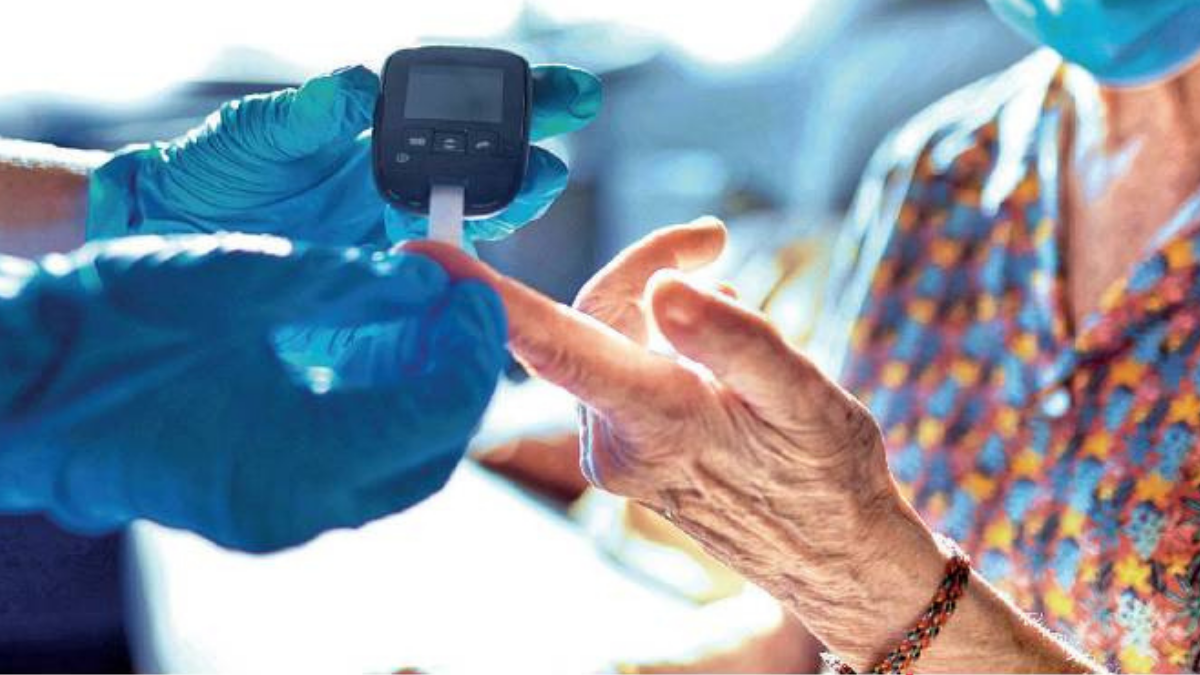
Asymptomatic diabetes the new concern for Hyderabad

Majority of new patients do not have any of the typical symptoms of diabetes like frequent urination, fatigue, excessive thirst or hunger, weight loss and blurry vision. Nutritionists and diabetologists say it could be linked to the change in food intake and limited or no exercise during the pandemic.


Asymptomatic diabetes the new concern for HyderabadHYDERABAD: In a worrying trend that has left health experts baffled, hundreds of asymptomatic diabetes cases are coming to light during routine health checks across Hyderabad with no tell-tale symptoms of blood sugar increase, said doctors.

Majority of new patients do not have any of the typical symptoms of diabetes like frequent urination, fatigue, excessive thirst or hunger, weight loss and blurry vision. Nutritionists and diabetologists say it could be linked to the change in food intake and limited or no exercise during the pandemic.
Take the case of 47-year-old Suhasini Kumar, who had a blackout at home for 45 seconds and her family insisted on a master health check-up the next day. “During the check-up, my blood sugar levels were higher. Since I don’t have a family history of diabetes, the doctors decided to go for a more fool-proof test which proved that I indeed have moderately high blood sugar,” Kumar who lives in Banjara hills said.

“It was a jolt for me as I never had the usual signs diabetes symptoms and had I not gone for tests, I would not have known that I am asymptomatic diabetic. Thankfully with change in food and lifestyle, I can reverse it, I am told,” she added.

Doctors say more and more people during the lockdown have developed higher blood sugar and are completely in the dark about it. Even overweight children as young as 12 years old are testing positive to asymptomatic diabetes and pre-diabetes.

“In the last one and a half year with restricted physical activity and same amount of calorie intake leading to drastic weight gain, we are seeing many people who come for regular check-ups and have a chance discovery of diabetes,” said K Sunitha Premalatha, chief dietician, Yashoda hospitals. She gave an example of chance discovery of pre-diabetes in a 23-year-old who came with leg swelling on Thursday. The boy’s mother too was detected to be diabetic during the check-up.

“When we ask for typical symptoms, they don’t have any but the common thing is restricted physical activity. Weight gain of 6-8 kg in a span of one year is seen in these patients,” she added. While a lot of importance is laid on weight gain, increase in waist size for keeping a check on diabetes, the awareness about pre-diabetes is also equally important, say doctors. Higher levels of stress during the pandemic have also played their role, believe doctors.

“The number one reason for diabetes is stress. Diabetes can be stress-induced, drug-induced or even Covid-induced. Whenever high levels of stress remain unaddressed in time, it brings out hidden diabetes and hypertension,” said Dr Ashish Chauhan, senior consultant diabetologist at Apollo Hospitals, who has seen 100 new cases since the pandemic. “Many patients also have vague symptoms like depression, irritation, drowsiness, insomnia and sexual dysfunction but they don’t know that it can be a symptom due to less awareness,” he added


US CDC internal report calls Delta variant as contagious as chickenpox

The Delta variant is more transmissible than the viruses that cause MERS, SARS, Ebola, the common cold, the seasonal flu, and smallpox, and it is as contagious as chickenpox, the newspaper added, citing the document.

reuters
reuters
The Delta variant is much more contagious, more likely to break through protections afforded by the vaccines, and may cause more severe disease than all other known versions of the virus, according to an internal presentation by the US Centers for Disease Control and Prevention, the New York Times reported on Friday.

The Delta variant is more transmissible than the viruses that cause MERS, SARS, Ebola, the common cold, the seasonal flu, and smallpox, and it is as contagious as chickenpox, the newspaper added, citing the document.

Tuesday, 12 May 2020

First CRISPR test for the coronavirus approved in the United States

The kit has been granted approval under ‘emergency use’ provisions, and should help to ease testing backlogs in the country.
More than 60 coronavirus tests have been approved for emergency use in an effort to keep pace with the pandemic.Credit: Al Seib/Los Angeles Times via Getty
The US drug regulator has granted its first emergency-use approval for a new coronavirus test that takes advantage of the gene-editing technology CRISPR.
The US Food and Drug Administration’s (FDA) emergency-use authority allows it to make tests and drugs available faster than usual in a public-health emergency. The new diagnostic kit is based on an approach co-developed by CRISPR pioneer Feng Zhang at the Broad Institute of MIT and Harvard in Cambridge, Massachusetts. It will be used to test for the novel coronavirus behind the ongoing pandemic, SARS-CoV-2, in laboratories that are certified to provide clinical-test results.
Although the United States has ramped up testing in the past week — averaging nearly 250,000 tests per day, according to the non-profit organization The COVID Tracking Project — there are test shortages in some places. Widespread use of the new FDA-approved kit could help to alleviate backlogs and increase testing, says Mitchell O’Connell, a biochemist at the University of Rochester in New York, who was not involved in developing the test. But O’Connell cautions that it remains to be seen how well the test performs in real-world conditions, such as hospitals, compared with standard tests.
The CRISPR-based diagnostic kit has been developed by Sherlock Biosciences, a biotechnology company also based in Cambridge. It works by programming the CRISPR machinery, which has the ability to home in on certain genetic sequences, to detect a snippet of SARS-CoV-2 genetic material in a nose, mouth or throat swab, or in fluid from the lungs. If the virus’s genetic material is found, a CRISPR enzyme generates a fluorescent glow. The test can return results in about an hour, according to the company.
Researchers led by Zhang and bioengineer James Collins at MIT first described the basis of the test approach in 20171. A team composed of some of the same scientists showed that it could detect low levels of Zika and Dengue virus in 20182.
Other labs are also developing SARS-CoV-2 diagnostic tests based on CRISPR. Last month, researchers in San Francisco, California, published details of an assay that could return results in about 40 minutes3. A similar approach has been reported in a preprint by scientists in Argentina and in California4.
The chief executive of Sherlock Bioscience, Rahul Dhanda, says that the company is now working to create a single cartridge that would not need to be processed in a laboratory and could be used at home. But such a test would need additional validations and another FDA authorization, Dhanda says.
Since early April, the agency has issued emergency-use authorizations for more than 60 SARS-CoV-2 diagnostic tests. None of these tests have received clearance to be used and processed entirely at home.

Monday, 13 April 2020

Covid-19

HCQ not the magic drug you’re waiting for?

Instead, the study showed that HCQ administration was associated with an increased need for escalation of respiratory support compared to supportive treatment only. The study was conducted by researchers from Sinai Grace and Henry Ford Hospital in Detroit, the largest and most populous city in the US state of Michigan. Both hospitals have been designated for Covid-19.
HCQ not the magic drug you’re waiting for?New DelhiHydroxychloroquine (HCQ) might not be the magical drug for Covid-19 that everyone has been waiting for. A study conducted in the US showed the administration of this drug — originally used to treat malaria and autoimmune diseases such as rheumatoid arthritis and lupus — in hospitalised Covid-19 patients brought no significant benefits in reducing the mortality rate, compared to those who received only supportive treatment.

Instead, the study showed that HCQ administration was associated with an increased need for escalation of respiratory support compared to supportive treatment only. The study was conducted by researchers from Sinai Grace and Henry Ford Hospital in Detroit, the largest and most populous city in the US state of Michigan. Both hospitals have been designated for Covid-19.

According to researchers, they enrolled 63 Covid-19 patients for the study to assess the efficacy of HCQ. One group consisting 32 hospitalised Covid-19 patients was given HCQ — initially 400mg twice daily for one to two days and then three to four subsequent days of 200mg to 400mg once daily dose — in addition to the supportive treatment. The other group consisting for 31 patients, meanwhile, received only supportive treatment.

“The HCQ group had a significantly higher respiratory support need after five days compared to the support-only group. The HCQ group also had a strong but no statistically significant trend towards worsening Neutrophil-to-Lymphocyte Ratio (NLR), which is used as a marker of systemic inflammation,” the researchers claimed in the study, which is now under review for publication by the New England Journal of Medicine — one of world’s top medical journal. “We recommend a more judicious prescription of HCQ in the setting of SARS-CoV2 (Covid-19) before a larger analysis can be completed,” the authors claimed.

India is the world’s largest producer and exporter of HCQ. Recently, US President Donald Trump appealed to Prime Minister Narendra Modi to open up its exports. Trump has, in a controversial move, cleared the use of this anti-malarial drug against Covid-19. India has allowed the use of the drug as prophylactic for frontline healthcare workers, but not yet as treatment.

Anthony Fauci, the doctor at the forefront of US’s response to the pandemic, stressed that the evidence for clinical efficacy of HCQ for Covid-19 treatment was ‘anecdotal’. The French agency for safety of health products has also recently stated how cases of adverse reactions had been reported in connection with medicines.

Dr S K Sarin, director of ILBS, said, “The drug has known side-effects, which must be accounted to while looking at its efficacy.”

AIIMS director Dr Randeep Guleria said: “Like any other drug, HCQ has side effects. It should be taken by only those it has been recommended to by ICMR because that has been decided after looking into the risk-benefit analysis.”

Tuesday, 17 March 2020

Seattle [US]: As coronavirus cases continue to shoot up across the globe, researchers in the US gave first shot to the first person in a test of an experimental COVID-19 vaccine on Monday.

According to a report by the Associated Press (AP), scientists at the Kaiser Permanente Washington Research Institute in Seattle begin an 'anxiously awaited first-stage study of a potential COVID-19 vaccine developed in record time'.

Forty-three-year-old Jennifer Haller of Seattle, an operations manager at a tech company, received the injection inside an exam room.

Haller, the mother of two teenagers, termed it an "amazing opportunity" for her to "do something".

The said 'vaccine', codenamed mRNA-1273, was developed by the National Institutes of Health (NIH) and Massachusetts-based biotechnology company Moderna Inc.

More than 1,50,000 people have been infected worldwide by the virus which originated in China last December and has claimed the lives of over 6,500 people.

"We are team coronavirus now. Everyone wants to do what they can in this emergency," Kaiser Permanente study leader Dr Lisa Jackson was quoted as saying on the eve of the experiment.

Jackson said that from not even knowing that coronavirus was out there to have any vaccine in testing in about two months is 'unprecedented'. She, although, said that it is not at this stage where it would be "possible or prudent" to give it to the general population.

The tests came amid worldwide attempts to develop the vaccine for the deadly virus.

However, these vaccines are unlikely to be available for widespread use anytime for 12 to 18 months, said Dr Anthony Fauci of the NIH.

Finding a vaccine "is an urgent public health priority," Dr Fauci was quoted as saying.

According to the AP report, most of the vaccine research underway targets a protein aptly named "spike" that studs the surface of the new coronavirus and lets it invade human cells.

Thursday, 25 July 2019

35% households in Punjab have substance abuse problem- information form a study.

CHANDIGARH: Nearly 35% of the households in Punjab have at least one person with substance use disorder, reveals a study conducted by the department of psychiatry, Government Medical College and Hospital (GMCH), Chandigarh. 

This is the first comprehensive substance use disorder report in Punjab. The findings of the study, which was part of the National Mental Health Survey conducted in 12 states, have been published in the latest edition of Indian Journal of Medical Research. In the study, a total of 2,895 individuals from 719 households in four districts - PatialaLudhiana, Moga and Faridkot - of Punjab participated.

Of total, 251 households (34.91%) had at least one person suffering from any substance - alcohol, tobacco and illicit drugs - use disorder. 

Substance use highest in 30-39 year age group in metros
In as many as 63 households at least one person was found to be consuming illicit drugs, 176 alcohol and 127 tobacco.

Only 86 individuals of 2,895 reported using illicit substances such as opioids, cannabinoids and benzodiazepines. Of these 86 individuals, 67 were opioid users and 11 were consuming cannabis. Among opioid users, 18 reported use of only opium and 36 reported use of opioids other than opium. Only three persons reported use of heroin.
Among the total persons who consumed alcohol, the prevalence of alcohol dependence was 4.8% and harmful use 3.1% while harmful use of illicit substance was 0.6%. Among persons consuming tobacco, 2% had significant dependence and 3.5% had lowto-moderate dependence.

The substance use was found to be highest in the productive age group of 30 to 39 years in urban metros and less educated individuals.

The most common mental disorder found among persons using substance was depression (5.7%), followed by neurotic and stress-related disorders (2.2%) and schizophrenia and other psychotic disorders (1.8%).

The treatment gap was found in the study population to be 80.9 — 81.4% in case of alcohol; 96.9% for tobacco; and 60% for illicit substances. The treatment gap for alcohol and other substance use disorders was highest among persons between the age group of 50 to 59 years.

The study has recommended identification and treatment of persons with illegal substance use disorders should be a priority area for the government and health professionals.

The study was conducted by a five-member team led by Dr B S Chavan, director-principal of GMCH, comprising Dr Subhash Das, Sonia Puri, Rohit Garg and Arvind Anniappan Banavaram.